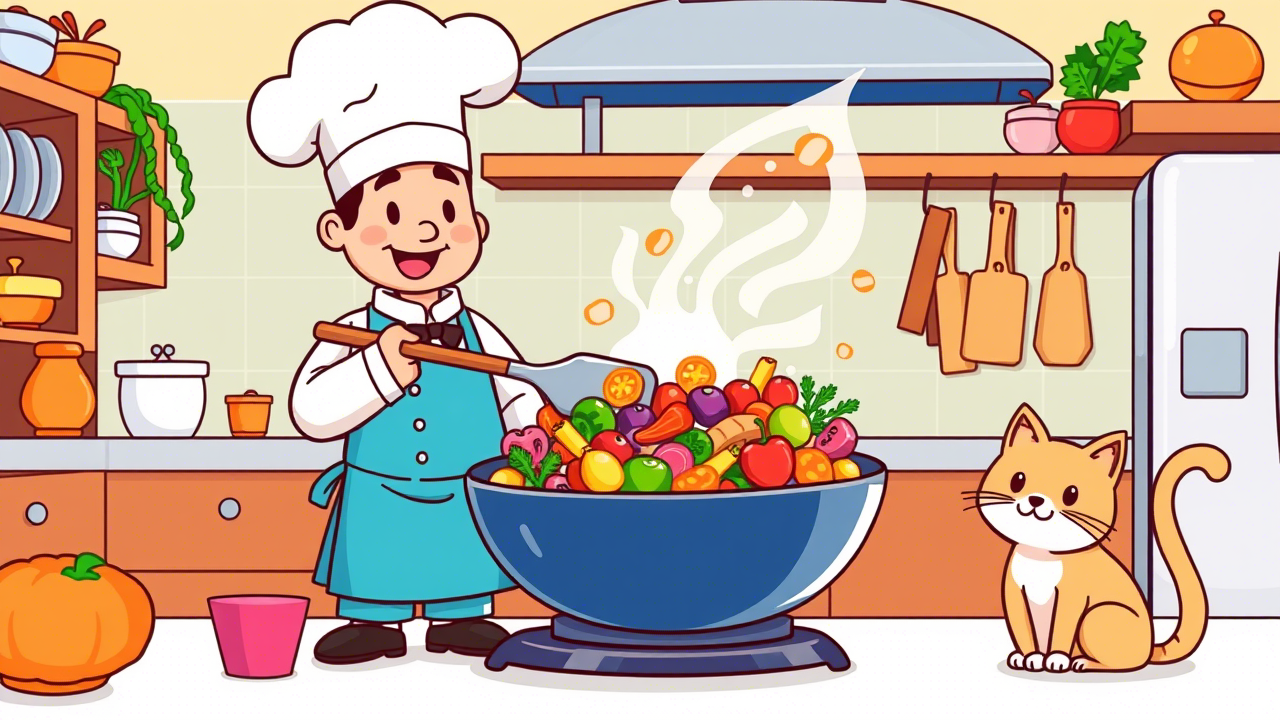
Stir-Fry Magic Using Random Veggies
Have you ever peered into your fridge, experiencing a so, what do I do with the random veggies? I know I have.
The good news is, stir-frying them can be a game-changer. This no-fuss cooking method is not only a time-saver but also makes a dent in the food waste that’s a huge problem in the U.S.
Each year, we waste 66 million tons of food, and a significant portion of that is perfectly good vegetables.
When you use up scrap veggies in stir-fry, you’re doing more than just making dinner.
Not only are you saving money, conserving resources, and, hell, potentially saving the planet, but you can set your conscience ablaze.
Yes, it’s that powerful. So let’s dig into how this relatively humble practice can make a humongous difference.
The Food Waste Crisis
I’m going to throw some numbers at you. Last year, the U.S. squandered 66 million tons of food. That’s an entire football stadium full of uneaten meals.
And guess what? Much of that waste occurs right at home. An estimated 43% of all food produced in the U.S. ends up in the trash, but fruits and veggies are the biggest offenders.
Hardest of all, 38% of all food doesn’t sell or doesn’t get eaten. Which means 149 billion meals are wasted annually.
“There’s got to be a way to feed millions of starving people with only a fraction of that. But sadly, most of it just rots in landfills. It’s heartbreaking.
The Economic Toll of Wasted Food
Now, to the dollars and cents. The amount of wasted food in the U.S. is worth an astronomical $473 billion a year.
That is nearly 2% of our entire GDP. Consider it: Every limp carrot or half-eaten bell pepper you chuck is, essentially, money down the drain.
And it’s not just households, for that matter. Grocery stores, restaurants, and farms all play a role in that cycle.
Reusing random vegetables in stir-fries is one small step in the other direction. And who doesn’t love a little savings?
Environmental Impact
Food waste, when it sits in landfills, generates methane which is a powerful greenhouse gas.
Surprisingly (or unfathomably), the climate impact of wasted food is roughly equal to that of the entire United States aviation industry.
That’s insane. Every piece of produce you save from the trash can helps reduce emissions.
But wait, there’s more. Throwing food away means throwing water away, too.
We waste 5.9 trillion gallons of water every year with food waste. To put that in perspective, that’s enough to power 50 million American homes for a year.
So when you’re cooking up your miscellaneous veggies, you’re indirectly saving finite resources.
Social Implications
Here is something that really hurts. More than one in 10 American households struggles to put enough food on the table. But mountains of edible food are being thrown away.
Doesn’t that seem wrong? To make stir-fries out of all that leftover veg and help to continue the good work of that paradox.
While it can be easy to feel like one person’s actions are small, taken all together, the collective efforts add up very quickly.
What if everyone began using their stray vegetables instead of just throwing them out? We would have fewer hungry families and less stress on our food systems. It’s a win-win situation.
The Power of Prevention
Preventing food waste isn’t just about the compost pile or recycling bin; the focus is really on how it starts. In the kitchen, we play with our food.
So instead of rotting vegetables, why not a quick stir-fry? It is easy, it’s fast, and it’s delicious.
Think about it. When you address prevention, you’re getting at the root of the issue.
Recycling and composting are wonderful, but they arrive further down the chain. The randomness helps make sure those veggies never turn into waste in the first place.
How the Waste Adds Up With go-to meals failing, to-go orders planning out and bars closing up for the evening, mealtime chat on these nights centers on the truism of what to do and where to go next.
How Much Food Waste Ends Up Where?
Let’s break it down with some stats:
| Metric | Value/Statistic |
| Total food waste generated (2019) | 66 million tons |
| Food wasted in homes | 43% (~21 million tons) |
| Percentage of food unsold or uneaten | 38% (149 billion meals) |
| Economic value of wasted food | $473 billion (1.8% GDP) |
| Water wasted due to food waste | 5.9 trillion gallons |
| Food waste landfilled (2019) | 39.6 million tons |
| Food waste composted (2019) | 3.3 million tons |
| Food insecurity in U.S. households | Over 10% |
Notice anything alarming? Just 3.3 million tons of food waste was composted in 2019, while 39.6 million tons went to landfills.
It is surely time for us to change our way of thinking. You can also just stir-fry some random veggies.
Why Stir-Fry Works Wonders
I’m no chef, but I have discovered that stir-frying is a forgiving process. You don’t have to have fancy ingredients or measure things precisely.
Just chop some veggies, drop them in a skillet, and voila—dinner. Here’s why it works so well:
- Adaptability There are very few vegetables that don’t work here. Zucchini, carrots, broccoli, spinach — you get the idea.
- Speed: It comes together in less than 20 minutes. Perfect for busy weeknights.
- Flavor: A drizzle of soy sauce, a shower of garlic, and a shower of ginger can turn the blandest leftovers into something tasty.
- Health Benefits: You’re getting more veggies in your day whether you realize it or not.
Stir-fry, for me, is also a fridge cleaner-outer (in a good way). No guilt over forgotten produce that’s become a shadowy vegetable in the crisper drawer.
Tips for Making Stir-Fry Magic Happen
If you’re a stir fry newbie, no problem — I’ve got you covered. Here are my top tips:
- Use What You Have. Don’t stress about having “perfect” veggies. Soft carrots? Fine. Willing greens? Even better.
- Prep Ahead. Chop everything before you start cooking. Stir fries happen fast, so prep work makes life easier.
- Add Protein. Want to bulk up your meal? Just toss in tofu, chicken, or shrimp.
- Experiment with Sauces. Soy sauce, teriyaki, hoisin—the possibilities are endless.
- Serve with rice or noodles. This stretches the dish further and adds variety.
- Trust me, once you get the hang of it, stir frying becomes second nature.
Beyond the Pan
Tossing in random veggies in the stir fry may seem small, but the ripple effect is huge. For one thing, you are reducing greenhouse gas emissions.
Less food winding up in landfills also means less methane getting released into the atmosphere.
You’re also conserving water. Remember all those 5.9 trillion gallons wasted every year? Each vegetable you repurpose helps knock it down.
And then of course there are the economic benefits. Save food, save money — the typical family of four throws away $1,500 per year of wasted food.
In a broader context, such small actions are part of the global fight against food insecurity.
When we use what we’ve got, we decrease demand for additional resources and ease some of the burden on farmers and distributors.
Final Thoughts
Dumping a bunch of random vegetables into a stir-fry isn’t just a cooking hack — it’s a powerful weapon in the fight against food waste.
And with 66 million tons of food wasted in the United States every year, every little bit helps.
So the next time you find yourself with a bunch of “miscellaneous” produce, pull out a pan and be creative.