Viking Feast Night: 4 Power-Packed Meals from the North
Have you ever wondered what Vikings ate to sustain these epic expeditions?
Their diet was substantial and nutrient rich, to keep them fueled throughout cold Scandinavian winters and arduous sea voyages.
The thing was, they ate lamb stew, flatbread, fish stew and honey-glazed turnips. Here, I will walk you through those four meals.
You will find out how to make them, why they are healthy to eat and where they fit into Viking life.
Ready to cook like a Viking? Let’s dive in.
Why Should You Care About Viking Cuisine?
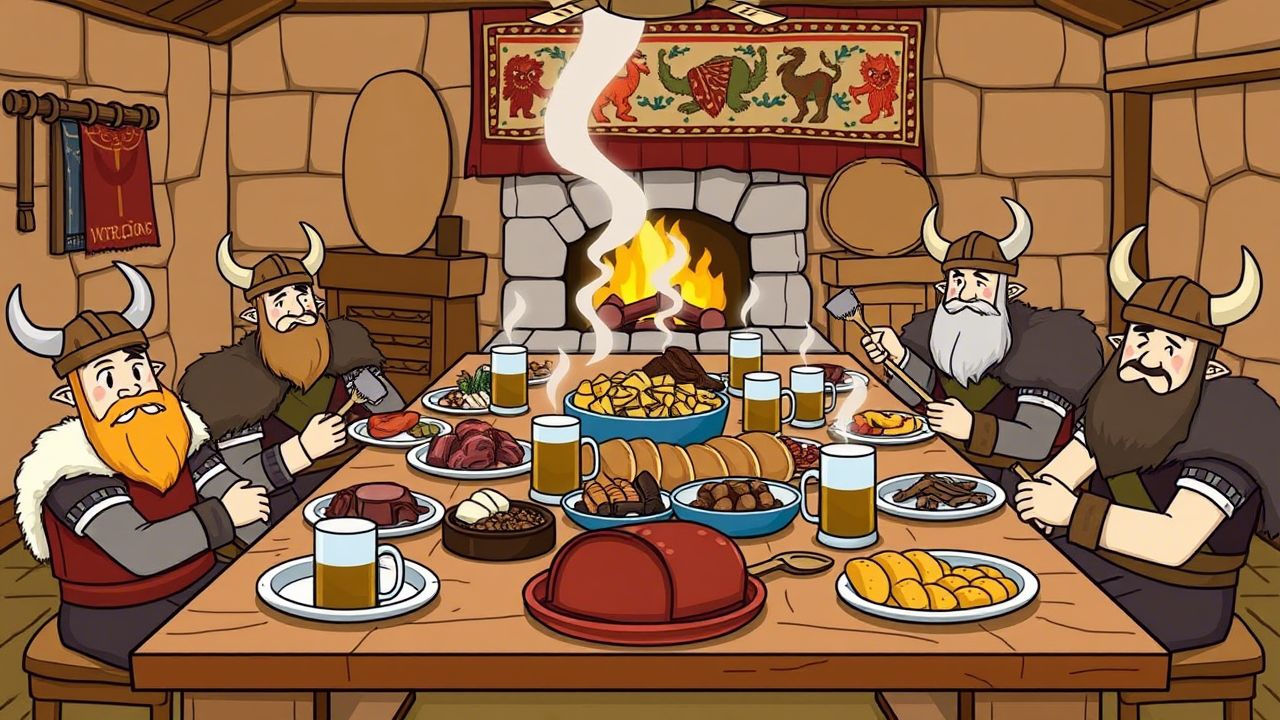
For the Vikings, food wasn’t just about survival—it was about community, resilience and flavor. Picture a roaring fire, a group of people sharing stories and enjoying a nourishing meal of thick stews and sweetened root vegetables. That’s the Viking way. The meals are easy, filling and full of nutrients.
So let’s begin with a feast-worthy star: Viking Lamb Stew.
1. Viking Lamb Stew (Kjøttkake)
Lamb stew was a luxury for the Vikings! Meat wasn’t an everyday affair—it was saved for feasts.
But when they did cook it, they cooked it right. This stew is thick and packed with flavor.
Ingredients You’ll Need
- 1 lb lamb or beef chunks (the heartier, the better)
- 2 cups chopped root vegetables (carrots, turnips, onions)
- 4 cups water or broth
- Salt, pepper, and wild herbs like thyme and parsley
Nutritional Value
(If that sounds too decadent, feel free to use the more familiar beef stew meat.) This particular stew is high in protein and iron from the lamb.
The root vegetables contribute fiber and vitamins. It’s the one pot of food that’s a full meal.
Cultural Fact
Vikings only ate meat on special occasions.
They would most probably have been baked with local herbs which they would have used to improve the taste.
Consider it seasoning in their world.
How to Make It
Start by browning the meat. Add the chopped vegetables and broth. Simmer 1.5–2 hours until everything is tender. Serve hot, accompanied by some flatbread, if you like.
I love how the flavors soak into each other. Each bite is a little hug from the past.
2. Viking Flatbread (Hviti Brauð)
Vikings needed their flatbread. It’s easy, satiating and goes well with stews and meats. Consider it their equivalent of bread — only better.
What’s in It?
- A mix of flours (barley, rye, or wheat)
- Salt and water
Why It’s Great
Flatbread The complex carbohydrates and fiber you get from flatbread. It’s a good go-to, great for long days of raiding or farming.
Did You Know?
Flatbread was a daily staple. It was also typically served with stews and meats. A Viking meal didn’t feel right without it.
My Take
To prepare it, combine your dough, form it into small balls and flatten them into discs.
Bake in a dry frying pan or hot stone such as baking stone until golden.
It’s simple and fast, and oh-so-satisfying.
The beauty of flatbread is its versatility. You can wear it with just about anything.
3. Viking Fish Stew (Fiskasúpa)
The Vikings ate fish as it was a staple of their diet, particularly in the coastal towns. This broth, which is light but full of flavor, is also rich in omega-3s and vitamins.
Key Ingredients
- 2 lbs mixed fish (cod, haddock)
- 1 large onion
- 4 cups fish or vegetable broth
- 2 cups diced root vegetables
- 1 cup leeks
- 1 tsp dill
- Salt and pepper
Health Benefits
This dish is full of omega-3 fatty acids, protein and vitamins A and C, and is a light yet satisfying Viking staple.
Fun Fact
Fish was a daily staple for real Vikings PC: Fish was a staple for real Vikings everyday PC: Berries and fruit Vikings grew fruits and berries (though they also enjoyed honey).
Communities along the coast depended on it. It was fresh, plentiful and simple to prepare.
How to Cook It
Sauté the onion and leeks. Throw in your veggies and your stock and simmer. Drop the fish and dill in and cook for 10 minutes. That’s it.
The smell as this stew cooks is amazing! It feels like a visit to the Viking shores.
4. Honey Glazed Turnips (Hunangsglæðar Snæpurnar)
Turnips may not sound thrilling, but add a little honey and butter, and you’ve got magic. This meal is sweet, salty, and all things good.
What Goes In?
- 2 lbs turnips
- 2 tbsp honey
- 2 tbsp butter
- Salt
Why It’s Good for You
Turnips contain vitamins and minerals. Honey provides very basic, natural sugars to the system, and boosts your energy level.
(Although hearty mains share the menu with it, it’s more like a side dish to balance out richer options.)
Did You Know?
Vikings sweetened their life with honey. And they made mead with it, which is their traditional fermented drink. There’s no denying it was both functional and festive.
Easy Recipe
Blanch the turnips for 20 minutes. Drain them, and then return the grains to the pot, along with honey, butter and salt. Cook until glazed. Simple, right?
The sweetness of the honey has a good counterbalance in the earthiness of the turnips. It’s a pairing made in Valhalla.
Summary Table of Viking Feast Meals
Here’s a simple comparison of the ones we’ve done so far:
| Dish | Main Ingredients | Prep Time | Serving Size | Key Nutrients | Viking Fact |
| Viking Lamb Stew | Lamb, root vegetables, herbs | 1.5–2 hours | 4 | Protein, iron, fiber | Meat was a luxury, cooked with herbs |
| Viking Flatbread | Flour, water, salt | 20–30 min | 6–8 | Carbohydrates, fiber | Staple carbohydrate source |
| Viking Fish Stew | Mixed fish, root vegetables, broth | 1 hour | 6 | Omega-3, protein, vitamins | Fish was common in coastal diets |
| Honey Glazed Turnips | Turnips, honey, butter, salt | 30 min | 4–6 | Vitamins, natural sugars | Honey was a primary sweetener |
Additional Viking Food Facts and Stats
So let’s get down to Viking eating. Here’s what packed such vigor into their diet:
Core Ingredients
Vikings ate plenty of protein (meat and fish), complex carbohydrates (barley, rye, flatbread) and vegetables (root vegetables such as turnips, carrots and onions).
These were nutrient-dense foods that were simple to grow or catch.
Meat and Feasts
Meat was special. It was usually saved for feasts and special times. Fish and dairy remained the more frequent daily proteins.
Coastal settlements exploited the sea, and inland Vikings reared livestock and grew crops.
Honey and Mead
Honey was essential. It sweetened food and drink, but its principal use was in the making of mead.
This alcoholic drink was key to Viking feasts and oral history.
Cooking Methods
They were cooked over open fires or on hot stones. They broiled, boiled, stewed, and baked, and that was all.
These methods of preserving retained flavor and nutrients.
Viking Feasts
Feasts were social events. They were all about community, celebration and storytelling.
It was food and drink that brought people together. Mead flowed and the halls rang with laughter.
Final Thoughts
Preparing Viking inspired dishes is like a walk through your heritage. These are hearty, flavorful dishes that are more manageable to prepare than you might expect.
Have one tonight, and you’ll know what it’s like to be a warrior.